










Sign up for news

What it means "to OCW"

Dear Friend of OCW,

For over two decades, we’ve been honored to grow the material side of OCW – our website, courses, videos, notes and more – so that learners around the globe are empowered with knowledge freely shared by the MIT community. This stuff of OCW – OCW as a noun – is valuable precisely because learners make it so, put to use in their lives and in their communities. We are joined in community to activate this flow of knowledge, “to OCW” as a verb.

Every day, we challenge ourselves to OCW – that is, to approach our work with values rooted in creating, promoting, and expanding open educational resources and opportunities. We OCW to empower you and learners and educators around the world.

We also OCW because we believe knowledge should be free, accessible, and adaptable to serve your needs and help improve your life and the lives of people everywhere.

As we reflect back on how this belief was expressed this past year, we admire learners like Tomás and Doğa who applied knowledge from OCW to improve public health and understanding in the science of the universe. We also appreciate professionals like Atou and Bia whose lives and careers have been transformed by open resources.

And as much as technology like AI has and continues to shape the future of learning, we’re heartened by how our global community, from high school students to Nobel Laureates, is united by a shared commitment to lifelong learning.

Together, we’re building a more informed, connected, and empowered world. Thank you for being part of this journey.

Warmly,

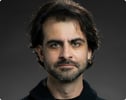
Portrait of Curt
Curt and the MIT OpenCourseWare Team
Curt Newton, Director
MIT OpenCourseWare

P.S. Next year will be OCW’s 25th Anniversary. We’re excited and humbled to recognize this milestone and look at what's in store for OCW’s next 25 years. We’ll be sure to keep you posted on how you can get involved in those activities.

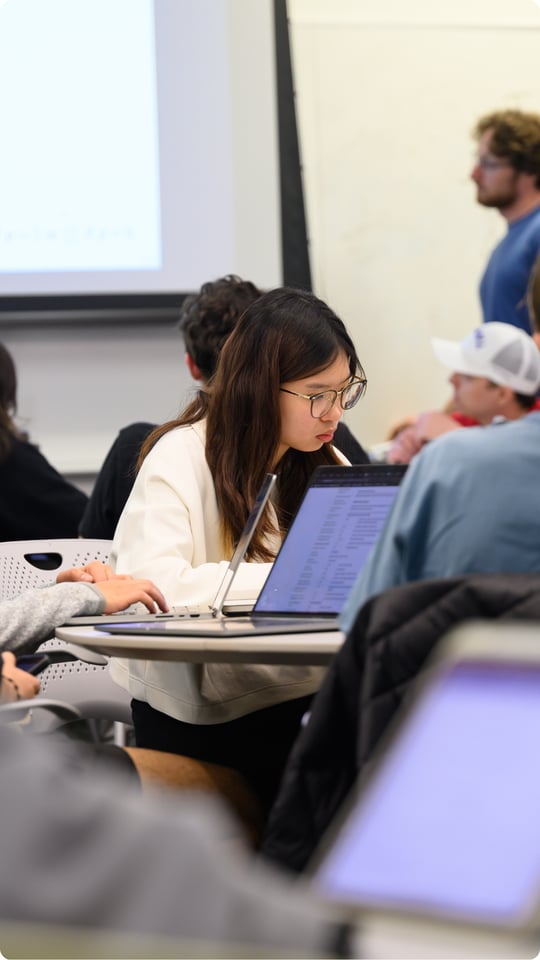
Instructor and students in class
The most important lesson OCW has taught me is that I can learn anything I want to, and anyone can. The brevity, the content, and the teaching methods of these MIT professors…make it wonderfully fun and that good communication and passion goes a long way.
Sangat

High School Student, Canada

Learning with OCW on YouTube

We're thrilled learners are finding our content on sites like YouTube. It's another important opportunity to reach new audiences with free MIT educational resources. 

icon-people-1
0 M+
OCW YouTube subscribers
0 M
YouTube views this year
icon-videos3
0
videos added this year
icon-views2
0 M
lifetime YouTube views of OCW courses
OCW was my gateway to high quality educational resources straight from MIT. It enormously helped me in high school studies and later in college, while providing me a powerful platform to thoroughly learn various concepts.
Sarvesh

Independent Learner, India

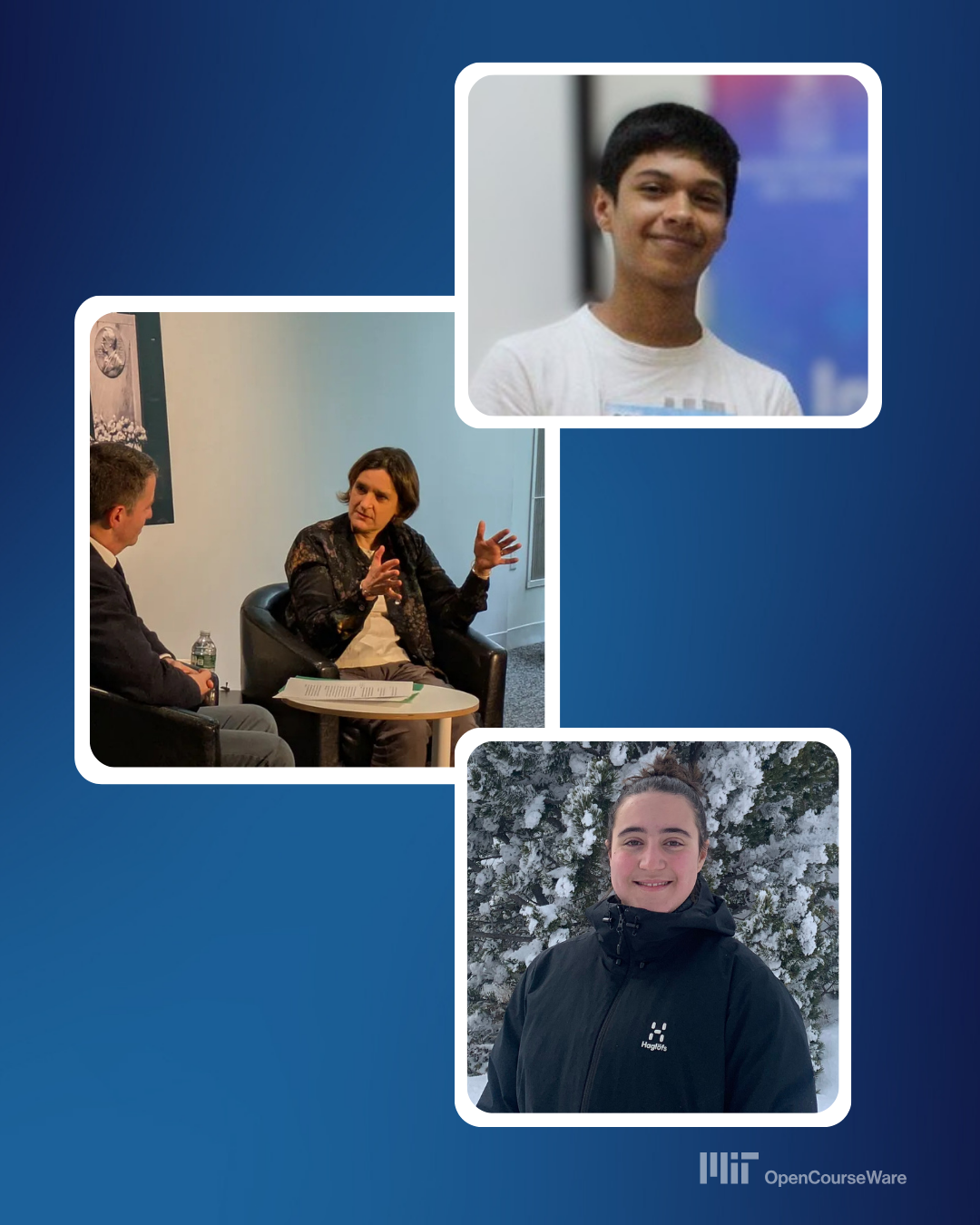
Esther Duflo, Chris Capozzola, Tomas Orellana, and Martina Solano Soto

Empowering Learners Through Open Educational Resources

We relish serving you and all learners. Whether you are a high school student, working professional, or simply curious about subjects you may have never had the opportunity to learn, we appreciate you using open educational resources like OCW and the Open Learning Library to advance and improve your education, careers, and personal growth.

We spoke with several people who shared how they were able to reach their goals with OCW resources. We heard from a Chilean high school student who used OCW to help treat students’ health issues and another student who is better prepared to grow her knowledge both academically and personally. Nobel Prize-winning economist Esther Duflo also explained how sharing research and knowledge through resources like MIT Open Learning can help effect change.

MIT OpenCourseWare holds one of the most powerful ideas in education that knowledge should be a public good. By making world class educational materials freely available to anyone, anywhere, OCW tears down barriers of geography, income, and circumstance. It empowers self learners, and problem-solvers from every corner of the world to think bigger and aim higher, which is the best thing for me.
Deepson

High School Student, Nepal

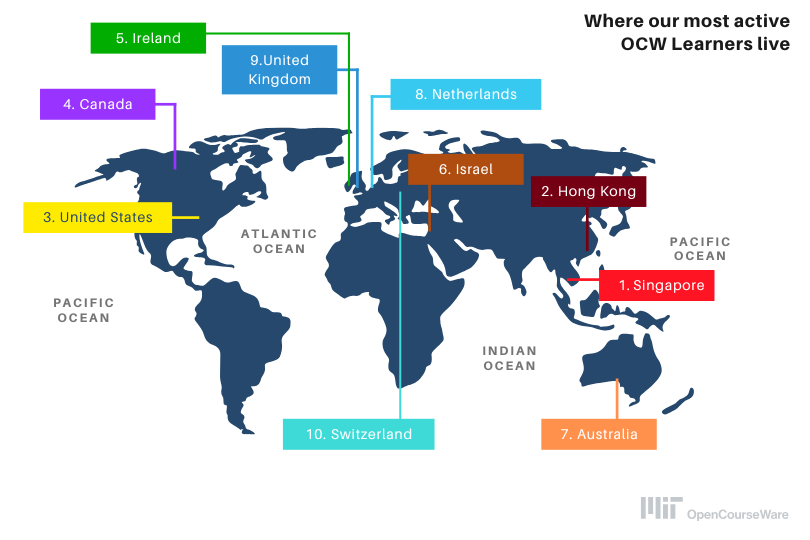
Where our most active OCW learners live: 1. Singapore 2. Hong Kong 3. United States 4. Canada 5. Ireland 6. Israel 7. Australia 8. Netherlands 9. United Kingdom 10. Switzerland
Chalk Radio Logo

Chalk Radio

This year, Chalk Radio took listeners on a deeper journey into the reasons behind MIT faculty’s teaching approaches and cutting-edge research. Listeners also heard from learners who shared how transformational access to open educational materials has been to their lives. Lastly the Chalk Radio Team debuted a new video format that brings the audience even closer to the action.

Chalk Radio by the numbers

0
episodes this year with a total of 56 lifetime episodes
0 K
podcast downoads this year
0 K
total lifetime downloads
0 K
lifetime YouTube views
What truly sets OCW apart is its commitment to accessibility. Unlike for-profit learning platforms that charge fees, OCW provides its resources entirely free of cost. This is a remarkable approach that allows students from various backgrounds to access high-quality educational materials. Additionally, being affiliated with a prestigious institution like MIT adds an extra layer of credibility and trust to the resources available.
Juan

OCW Supporter, United States

Reaching people learning through social media

icon-linkedin2
0 k
LinkedIn followers
icon-instagram
0 K
Instagram followers
icon-x2(1)
0 K
X followers
icon-facebook2
0 K
Facebook followers
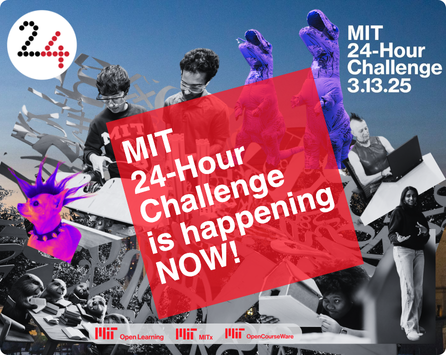
photo collage that includes the MIT campus, students, instructor, a learner, a dog, beavers, and dinosaurs

“I Wanna Be Educated” is a tribute to everything great about MIT Open Learning, MITx, and OpenCourseWare:

  • Free MIT educational resources right at your fingertips.
  • Our collective love for education, learning, and awesome MIT educators sharing their knowledge with the world.
  • The profound personal and professional impact of open access to education.

We appreciate every person who was able to support us with a gift during the
2025 MIT day of giving.

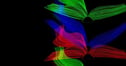
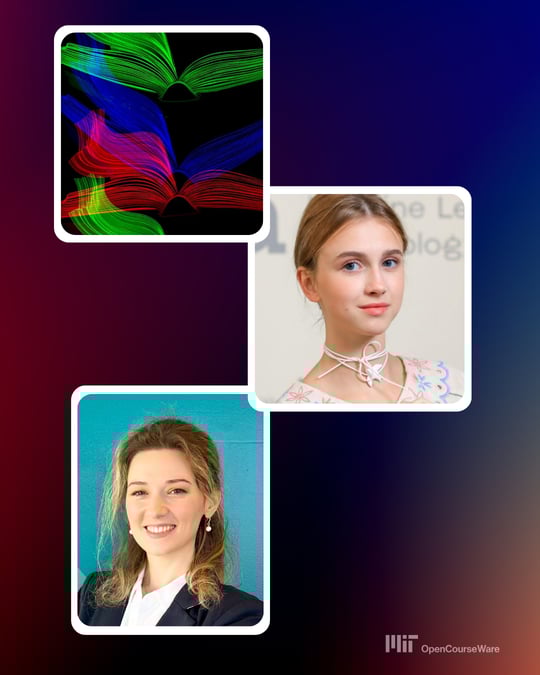
Illustration of open books in green, blue, and pink on a black background, Sofiia Lipkevych, and Ana Trisovic

The Intersection of Technology, AI, and Education

We believe artificial intelligence has real benefits for teaching and learning both in and for open education. Our colleagues in the open education space offer numerous ways to implement AI to tailor learning experiences, support learners with disabilities, and make open educational resources more accessible.

We learned from people who were inspired by open educational culture to further and empower other learners, like Ukrainian high school senior Sofiia Lipkevych and other students who translated OCW videos into Ukrainian using AI, and Ana Trišović an MIT computer scientist who discussed how downloading free MIT resources in Serbia when she was a student, influenced her career path in studying the democratization of AI.

Education is the only gift which grows over time in value, and MIT is giving not only knowledge, but a chance to live a better life and a knowledgeable one.
Sarvshresth

University Student, India

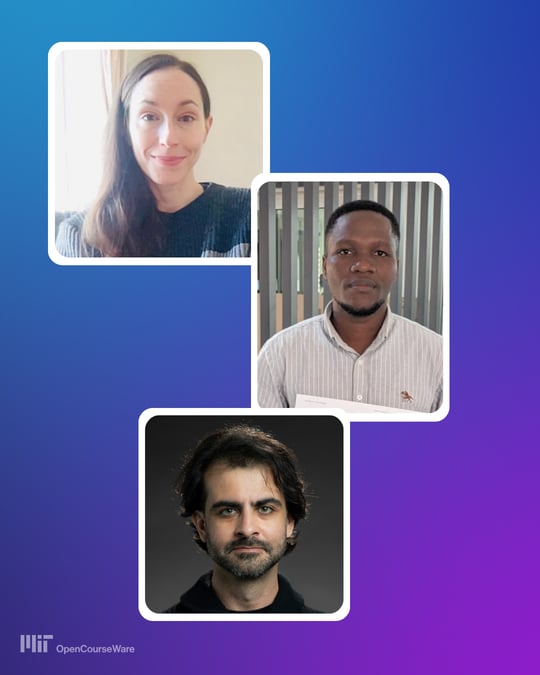
Bia Adams, Atou Koffi, and Doga Kurkcuoglu

A Community of Lifelong Learners

We’re motivated by your passion for learning and your drive to empower yourself and others. Whether it’s the deep joy of understanding or recognizing how learning will help chart your personal path of growth or career, we appreciate supporting you and a community of lifelong learners.

The dynamic community includes learners like Atou Koffi from Togo who used Open Learning resources to change his career, and Bia Adams from the United Kingdom who picked up quantum physics to satisfy her curiosity. Doğa M. Kürkçüoğlu, an American scientist, attributes OCW for sparking his joy of deep understanding.

OCW by the numbers

Numbers are from this academic year.

0
54 publications & 10 new instructor insights interviews
0 M+
learners used OCW
0 M
people accessed OCW through their mobile device
0 M
website visits to OCW
I have been able to study topics that I had previously not even known about, I have advanced my education beyond the limits set upon me by others who would have rather seen me fail and been able to follow my dreams thanks to OCW.
Kelly

Independent Learner, USA

Stories from our amazing OCW community

Tomás Orellana
Tomás Orellana
Teen uses pharmacology learned through MIT OpenCourseWare to extract and study medicinal properties of plants
Inspired by traditional medicine, 17-year-old Tomás Orellana is on a mission to identify plants that can help treat students’ health issues.

Sara Feijo | MIT Open Learning
Publication Date: October 7, 2024

Tomás Orellana, a 17-year-old high school student in Chile, had a vision: to create a kit of medicinal plants for Chilean school infirmaries. But first, he needed to understand the basic principles of pharmacology. That’s when Orellana turned to the internet and stumbled upon a gold mine of free educational resources and courses on the MIT OpenCourseWare website.

Right away, Orellana completed class HST.151 (Principles of Pharmacology), learning about the mechanisms of drug action, dose-response relations, pharmacokinetics, drug delivery systems, and more. He then shared this newly acquired knowledge with 16 members of his school science group so that together they could make Orellana’s vision a reality.

“I used the course to guide my classmates in the development of a phyto-medicinal school project, demonstrating in practice the innovation that the OpenCourseWare platform offers,” Orellana says in Spanish. “Thanks to the pharmacology course, I can collect and synthesize the information we need to learn to prepare the medicines for our project.”

OpenCourseWare, part of MIT Open Learning, offers free educational resources on its website from more than 2,500 courses that span the MIT curriculum, from introductory to advanced classes. A global model for open sharing in higher education, OpenCourseWare has an open license that allows the remix and reuse of its educational resources, which include video lectures, syllabi, lecture notes, problem sets, assignments, audiovisual content, and insights.

After completing the Principles of Pharmacology course, Orellana and members of his science group began extracting medicinal properties from plants, such as cedron, and studying them in an effort to determine which plants are best to grow in a school environment. Their goal, Orellana says, is to help solve students’ health problems during the school day, including menstrual, mental, intestinal, and respiratory issues.

“There is a tradition regarding the use of medicinal plants, but there is no scientific evidence that says that these properties really exist,” the 11th-grader explains. “What we want to do is know which plants are the best to grow in a school environment.”

Orellana’s science group discussed their scientific project on “Que Sucede,” a Chilean television show, and their interview will air soon. The group plans to continue working on their medicinal project during this academic year.

Next up on Orellana’s learning journey is the mysteries of the human brain. He plans to complete class 9.01 (Introduction to Neuroscience) through OpenCourseWare. His ultimate goal? To pursue a career in health sciences and become a professor so that he may continue to share knowledge — widely.

“I dream of becoming a university academic to have an even greater impact on current affairs in my country and internationally,” Orellana says. “All that will happen if I try hard enough.”

Orellana encourages learners to explore MIT Open Learning's free educational resources, including OpenCourseWare.

“Take advantage of MIT's free digital technologies and tools,” he says. “Keep an open mind as to how the knowledge can be applied.”

Back to Empowering Learners Through Open Educational Resources
Martina Solano Soto
Martina Solano Soto
Martina Solano Soto wants to solve the mysteries of the universe, and MIT Open Learning is part of her plan
The 17-year-old student from Spain uses MIT resources to deepen her understanding of math and physics.

Lauren Rebecca Thacker | MIT Open Learning
Publication Date: April 30, 2025

Martina Solano Soto is on a mission to pursue her passion for physics and, ultimately, to solve big problems. Since she was a kid, she has had a lot of questions: Why do animals exist? What are we doing here? Why don’t we know more about the Big Bang? And she has been determined to find answers.

“That’s why I found MIT OpenCourseWare,” says Solano, of Girona, Spain. “When I was 14, I started to browse and wanted to find information that was reliable, dynamic, and updated. I found MIT resources by chance, and it’s one of the biggest things that has happened to me.”

In addition to OpenCourseWare, which offers free, online, open educational resources from more than 2,500 courses that span the MIT undergraduate and graduate curriculum, Solano also took advantage of the MIT Open Learning Library. Part of MIT Open Learning, the library offers free courses and invites people to learn at their own pace while receiving immediate feedback through interactive content and exercises.

Solano, who is now 17, has studied quantum physics via OpenCourseWare — also part of MIT Open Learning — and she has taken Open Learning Library courses on electricity and magnetism, calculus, quantum computation, and kinematics. She even created her own syllabus, complete with homework, to ensure she stayed on track and kept her goals in mind. Those goals include studying math and physics as an undergraduate. She also hopes to study general relativity and quantum mechanics at the doctoral level. “I really want to unify them to find a theory of quantum gravity,” she says. “I want to spend all my life studying and learning.”

Solano was particularly motivated by Barton Zwiebach, professor of physics, whose courses Quantum Physics I and Quantum Physics II are available on MIT OpenCourseWare. She took advantage of all of the resources that were provided: video lectures, assignments, lecture notes, and exams.

“I was fascinated by the way he explained. I just understood everything, and it was amazing,” she says. “Then, I learned about his book, ‘A First Course in String Theory,’ and it was because of him that I learned about black holes and gravity. I’m extremely grateful.”

While Solano gives much credit to the variety and quality of Open Learning resources, she also stresses the importance of being organized. As a high school student, she has things other than string theory on her mind: her school, extracurriculars, friends, and family.

For anyone in a similar position, she recommends “figuring out what you’re most interested in and how you can take advantage of the flexibility of Open Learning resources. Is there a half-hour before bed to watch a video, or some time on the weekend to read lecture notes? If you figure out how to make it work for you, it is definitely worth the effort.”

“If you do that, you are going to grow academically and personally,” Solano says. “When you go to school, you will feel more confident.”

And Solano is not slowing down. She plans to continue using Open Learning resources, this time turning her attention to graduate-level courses, all in service of her curiosity and drive for knowledge.

“When I was younger, I read the book ‘The God Equation,’ by Michio Kaku, which explains quantum gravity theory. Something inside me awoke,” she recalls. “I really want to know what happens at the center of a black hole, and how we unify quantum mechanics, black holes, and general relativity. I decided that I want to invest my life in this.”

She is well on her way. Last summer, Solano applied for and received a scholarship to study particle physics at the Autonomous University of Barcelona. This summer, she’s applying for opportunities to study the cosmos. All of this, she says, is only possible thanks to what she has learned with MIT Open Learning resources.

“The applications ask you to explain what you like about physics, and thanks to MIT, I’m able to express that,” Solano says. “I’m able to go for these scholarships and really fight for what I dream.”

Back to Empowering Learners Through Open Educational Resources
Esther Duflo and Chris Capozzola
Sharing knowledge to address global poverty
Nobel Prize-winning economist Esther Duflo discusses how sharing research and knowledge through resources like MIT Open Learning can help effect change.

Duyen Nguyen | MIT Open Learning
Publication Date: June 18, 2025

“Never, never, never assume that the person in front of you is not ultra sharp and ultra smart and cannot understand what you’re telling them,” says Esther Duflo, the Abdul Latif Jameel Professor of Poverty Alleviation and Development Economics at MIT. Whether teaching MIT students, or an auditorium of 2,000 people who have never studied economics, or online learners from different parts of the world, Duflo says “anything can be approached.”

Duflo shared how this philosophy has informed both her teaching and research in a recent conversation with Christopher Capozzola, senior associate dean for Open Learning. The talk, “Alleviating poverty and sharing knowledge globally,” is the second in MIT Open Learning’s Open Conversation series, which highlights how access to knowledge can change lives, communities, and the world. Duflo is also the co-founder and co-director of the Abdul Latif Jameel Poverty Action Lab (J-PAL), a research center with affiliates from universities around the world. In 2019, she received the Sveriges Riksbank Prize in Economic Sciences in Memory of Alfred Nobel, commonly known as the Nobel Prize in Economics, for her contributions to an experimental approach to alleviating global poverty.


The metric of success: Changing the world

Duflo’s engagement with Open Learning programs began with MIT OpenCourseWare, which publishes materials from over 2,500 MIT courses. “This is great — this is more people than I will ever teach in person,” she remembers thinking when recordings of her class lectures were first shared on OpenCourseWare.

With the launch of MITx, an initiative at Open Learning that offers free massive open online courses (MOOCs) drawn from the MIT classroom, Duflo saw the opportunity to create a more engaging online learning experience. “I felt I can basically now almost teach the same way,” she says, adding that, while the MITx courses share the same core as the on-campus classes, “the spokes are different in different parts of the world.” Learners can enroll in courses for free or, for a low fee, earn a certificate for each completed course.

Through MITx, learners beyond campus can apply the knowledge they gain to make an impact within their particular contexts. And more than 360,000 people have — in part motivating Duflo to create the MITx MicroMasters program in Data, Economics, and Design of Policy (DEDP). Designed to equip learners with both practical skills and theoretical knowledge to tackle U.S. and global challenges like poverty, the program’s core curriculum includes graduate-level courses in essential topics such as microeconomics, probability and statistics, data analysis, and designing and running randomized evaluations to assess the effectiveness of social programs, key to Duflo’s Nobel Prize-winning approach.

Individuals who receive the DEDP MicroMasters credential by earning five course certificates become eligible to apply to MIT’s DEDP master’s program, as well as to several other pathway universities worldwide. This innovative admissions model prioritizes applicants’ performance in the online courses over traditional credentials, such as prior degrees or standardized test scores.

“If we can select people to come to MIT based on what we want them to do once they are at MIT, we could break the mold of admissions,” Duflo says, describing the DEDP MicroMasters’ launch as both a learning experience and a gamble. “We had to shepherd it through the process, get it approved in the faculty committee, and every step, people were like, ‘Are you sure this can work?’”

Today, DEDP MicroMasters and master’s alumni are pursuing careers in government, non-profits, and multilateral organizations around the world, or doctoral degrees at leading institutions including MIT, Harvard University, and the Paris School of Economics. With countless alumni equipped to positively impact the world, the gamble has paid off.

“When they come, we tell them they have to change the world — that’s the metric of success,” Duflo says. “And now they really are busy doing that.”

More powerful together

Sharing knowledge is also a critical part of Duflo’s work as a researcher. “Almost the minute I started teaching at MIT, I was convinced that what we needed to do is to not just run trials, but set up an infrastructure to make it easier for others to do it,” she says. The Abdul Latif Jameel Poverty Action Lab (J-PAL), which Duflo co-founded in 2003 with Abhijit Banerjee, the Ford Foundation International Professor of Economics at MIT and a co-recipient of the 2019 Nobel Prize in Economics, has grown into a network of more than 1,000 researchers around the world working to reduce poverty by rigorously evaluating social programs. Over 850 million people have been reached by programs and policies that have been informed by J-PAL affiliated researchers’ evaluations.

“Together, the research is so much more powerful,” says Duflo.

The Open Conversation talk “Alleviating poverty and sharing knowledge globally” was live-streamed with more than 6,000 people tuning in. In response to a question from several audience members about how open education can effect change, Duflo emphasized the importance of sharing learning and teaching resources in multiplying the impact of any program. “Many more people need to be able to do this work, and many more policymakers need to understand it and understand why they need to do it,” she says. “And for that, we need many more people trained.”

Duflo urges learners to be similarly persistent in their pursuit of knowledge, explaining that when “you manage to go above that step [of overcoming a hurdle] suddenly the perspective really opens.”

To learn from Esther Duflo, see these courses on:

MIT OpenCourseWare

MITx

  • MicroMasters Program in Data, Economics, and Design of Policy
  • Courses include: Microeconomics; Designing and Running Randomized Evaluations, Data Analysis for Social Scientists; and electives from: The Challenges of Global Poverty (Intro), Foundations of Development Policy: Advanced Development Economics (Advanced), Political Economy and Economic Development (Advanced), Good Economics for Hard Times (Intro), Microeconomic Theory and Public Policy (Advanced)

MIT Open Learning’s Open Conversation series launched in 2024 with a conversation focused on how open educational resources support professionals by closing knowledge gaps.

Back to Empowering Learners Through Open Educational Resources
Illustration of open books in green, blue, and pink on a black background
AI + Open Education
MIT Open Learning speaker series bridges AI and open education
The AI + Open Education Initiative Speaker Series brings global voices together to examine professional education, the judicious use of AI, and open practices.

Sara Feijo | MIT Open Learning
Publication Date: April 14, 2025

MIT Open Learning is fueling a global dialogue on the future of open education in an AI-driven world. Building on the momentum of its newly launched AI + Open Education Initiative that supported the publication of rapid response papers tackling the promises and pitfalls of this emerging field, Open Learning is now taking the conversation further with a virtual speaker series designed to spark deeper international exchange.

Kicking off on April 30, the new AI + Open Education Initiative Speaker Series shines light on the recently published rapid response papers — written by researchers and practitioners in Armenia, Brazil, Canada, Ghana, India, Mexico, the United Kingdom, and the United States — with a focus on professional education, the judicious use of AI, and open practices. Clint Lalonde, director of open education at BCcampus in Canada, will lead a discussion with Aigerim Shilibekova, author of “Addressing Challenges in Faculty Professional Development: UDL Training through AI-Enhanced OER in a Non-English Context,” and Royce Kimmons and Torrey Trust, select co-authors of “Judicious AI Use to Improve Existing OER.”

“MIT sparked an important conversation with the launch of the AI + Open Education Initiative and the release of the first round of rapid response papers exploring the relationship between AI and open education,” Lalonde says. “The incredible global response to the call for papers illustrates the importance and timeliness of this initiative to the open education community, and I am looking forward to continuing the discussion as part of the AI + Open Education Initiative Speaker Series.”

On May 12, Nick Baker, director of the Office of Open Learning at the University of Windsor in Canada, will lead a conversation on AI literacies and evaluation with Angela Gunder and Josh Herron, select co-authors of “AI Literacies and the Advancement of Opened Cultures,” and Hannah-Beth Clark and Margaux Dowland, select co-authors of “Auto Evaluation: A Critical Measure in Driving Improvements in Quality and Safety of AI-Generated Lesson Resources.”

“It’s very exciting to be part of the global conversation that these projects are catalyzing with the release of the Open + AI rapid response papers,” Baker says. “AI has the potential to significantly shift how we work in open spaces as it changes how humans create and share knowledge. There is both great potential and risk of amplifying existing biases and inequality, so there is also a need for caution and care as we approach AI in open.”

Both webinars will be focused on how AI might accelerate responsive open education practices and the inequalities that might become more entrenched through AI applications. The April 30 discussion will also explore the future of open education in an ecosystem shaped by AI systems, while the May 12 conversation will dive into new literacies needed for creators of open content co-creating with AI.

Through the speaker series and more broadly the AI + Open Education Initiative, MIT Open Learning aims to bring contributors and funders into public conversations that catalyze research, infrastructure, industry, and teaching innovations to advance open education for learners worldwide.

Both Lalonde and Baker have seen the impact of the AI + Open Education Initiative in their own work around AI and open education.

“The rapid response papers have given us a broader view of the ways in which AI can be applied to solve problems that are both innovative and practical, while continuing to highlight challenges and issues that come with working with AI,” Lalonde says.

And Baker adds: “Applying the values of the open community — collaboration, sharing, trust, connected communities, reflective practice, co-creation, transparency, care, ethics, and equity — seems like the most appropriate way to address the challenges and opportunities of AI.”

The AI + Open Education Speaker Series is hosted by the MIT OpenCourseWare Collaborations Program, part of MIT Open Learning. Register for the April 30 webinar at 2 p.m. EDT and the May 12 webinar at 11 a.m. EDT. Both webinars will be recorded and provided as open educational resources.

MIT Open Learning’s AI + Open Education Initiative is supported by the William and Flora Hewlett Foundation. The nine rapid response papers are published under an open access license and can be downloaded for free. Visit the initiative’s website and sign up for the initiative’s mailing list for more information.

Want to learn more about the AI + Open Education Initiative? Read about the initial call for proposals at the intersection of AI and open education, as well as the announcement of the publication of the nine rapid response papers.

Back to The Intersection of Technology, AI, and Education
Ana Trisovic
Ana Trišović
For this computer scientist, MIT Open Learning was the start of a life-changing journey
Ana Trišović, who studies the democratization of AI, reflects on a career path that she began as a student downloading free MIT resources in Serbia.

Lauren Rebecca Thacker | MIT Open Learning
Publication Date: March 30, 2025

As a college student in Serbia with a passion for math and physics, Ana Trišović found herself drawn to computer science and its practical, problem-solving approaches. It was then that she discovered MIT OpenCourseWare, part of MIT Open Learning, and decided to study a course on Data Analytics with Python in 2012 — something her school didn’t offer.

That experience was transformative, says Trišović, who is now a research scientist at the FutureTech lab within MIT’s Computer Science and Artificial Intelligence Laboratory.

“That course changed my life,” she says. “Throughout my career, I have considered myself a Python coder, and MIT OpenCourseWare made it possible. I was in my hometown on another continent, learning from MIT world-class resources. When I reflect on my path, it’s incredible.”

Over time, Trišović’s path led her to explore a range of OpenCourseWare resources. She recalls that, as a non-native English speaker, some of the materials were challenging. But thanks to the variety of courses and learning opportunities available on OpenCourseWare, she was always able to find ones that suited her. She encourages anyone facing that same challenge to be persistent.

“If the first course doesn’t work for you, try another,” she says. “Being persistent and investing in yourself is the best thing a young person can do.”

In her home country of Serbia, Trišović earned undergraduate degrees in computer science and mechanical engineering before going on to Cambridge University and CERN, where she contributed to work on the Large Hadron Collider and completed her PhD in computer science in 2018. She has also done research at the University of Chicago and Harvard University.

“I like that computer science allows me to make an impact in a range of fields, but physics remains close to my heart, and I’m constantly inspired by it,” she says.

MIT FutureTech, an interdisciplinary research group, draws on computer science, economics, and management to identify computing trends that create risk and opportunities for sustainable economic growth. There, Trišović studies the democratization of AI, including the implications of open-source AI and how that will impact science. Her work at MIT is a chance to build on research she has been pursuing since she was in graduate school.

“My work focuses on computational social science. For many years, I’ve been looking at what’s known as ‘the science of science’ — investigating issues like research reproducibility,” Trišović explains. “Now, as AI becomes increasingly prevalent and introduces new challenges, I’m interested in examining a range of topics — from AI democratization to its effects on the scientific method and the broader landscape of science.”

Trišović is grateful that, way back in 2012, she made the decision to try something new and learn with an OpenCourseWare course.

“I instantly fell in love with Python the moment I took that course. I have such a soft spot for OpenCourseWare — it shaped my career,” she says. “Every day at MIT is inspiring. I work with people who are excited to talk about AI and other fascinating topics.”

Back to The Intersection of Technology, AI, and Education
Sofiia Lipkevych
Sofiia Lipkevych
AI-enabled translations initiative empowers Ukrainian learners with new skills
Ukrainian students and collaborators provide high-quality translations of MIT OpenCourseWare educational resources.

Stefanie Koperniak | MIT Open Learning
Publication Date: May 5, 2025

With war continuing to disrupt education for millions of Ukrainian high school and college students, many are turning to online resources, including MIT OpenCourseWare, a part of MIT Open Learning offering educational materials from more than 2,500 MIT undergraduate and graduate courses.

For Ukrainian high school senior Sofiia Lipkevych and other students, MIT OpenCourseWare has provided valuable opportunities to take courses in key subject areas. However, while multiple Ukrainian students study English, many do not yet have sufficient command of the language to be able to fully understand and use the often very technical and complex OpenCourseWare content and materials.

“At my school, I saw firsthand how language barriers prevented many Ukrainian students from accessing world-class education,” says Lipkevych.

She was able to address this challenge as a participant in the Ukrainian Leadership and Technology Academy (ULTA), established by Ukrainian MIT students Dima Yanovsky and Andrii Zahorodnii. During summer 2024 at ULTA, Lipkevych worked on a browser extension that translated YouTube videos in real-time. Since MIT OpenCourseWare was a main source of learning materials for students participating in ULTA, she was inspired to translate OpenCourseWare lectures directly and to have this translation widely available on the OpenCourseWare website and YouTube channel. She reached out to Professor Elizabeth Wood, founding director of the MIT Ukraine Program, who connected her with MIT OpenCourseWare Director Curt Newton.

Although there had been some translations of MIT OpenCourseWare’s educational resources available beginning in 2004, these initial translations were conducted manually by several global partners, without the efficiencies of the latest artificial intelligence tools, and over time the programs couldn’t be sustained, and shut down.

“We were thrilled to have this contact with ULTA,” says Newton. “We’ve been missing having a vibrant translation community, and we are excited to have a ‘phase 2’ of translations emerge.”

The ULTA team selected courses to translate based on demand among Ukrainian students, focusing on foundational subjects that are prerequisites for advanced learning — particularly those for which high-quality, Ukrainian-language materials are scarce. Starting with caption translations on videos of lectures, the team has translated the following courses so far: 18.06 (Linear Algebra), 2.003SC (Engineering Dynamics), 5.60 (Thermodynamics & Kinetics), 6.006 (Introduction to Algorithms), and 6.0001 (Introduction to Computer Science and Programming in Python). They also worked directly with Andy Eskenazi, a PhD student in the MIT Department of Aeronautics and Astronautics, to translate 16.002 (How to CAD Almost Anything — Siemens NX Edition).

ocw-story-sofiia-course

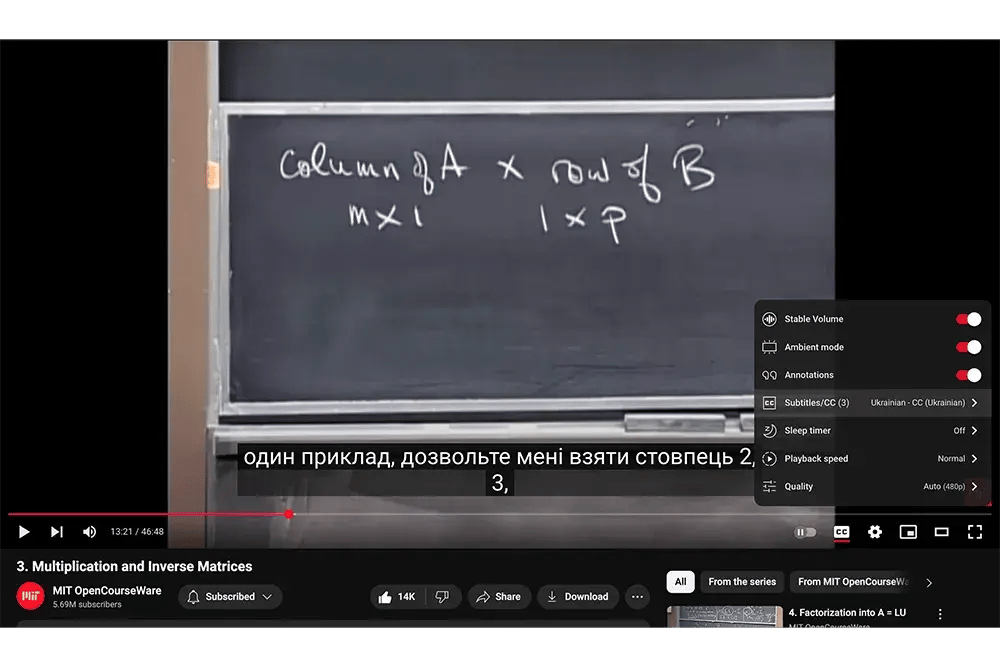
A screenshot of an MIT OpenCourseWare YouTube video on “Multiplication and Inverse Matrices” depicts the captions settings menu option for Ukrainian translations. Image courtesy of Sofiia Lipkevych.


The ULTA team developed multiple tools to help break language barriers. For MIT OpenCourseWare’s PDF content available through the ULTA program, they created a specialized tool that uses optical character recognition to recognize LaTeX in documents — such as problem sets and other materials — and then used a few large language models to translate them, all while maintaining technical accuracy. The team built a glossary of technical terms used in the courses and their corresponding Ukrainian translations, to help make sure that the wording was correct and consistent. Each translation also undergoes human review to further ensure accuracy and high quality.

For video content, the team initially created a browser extension that can translate YouTube video captions in real-time. They ultimately collaborated with ElevenLabs, implementing their advanced AI dubbing editor that preserves the original speaker’s tone, pace, and emotional delivery. The lectures are translated in the ElevenLabs dubbing editor, and then the audio is uploaded to the MIT OpenCourseWare YouTube channel.

The team is currently finalizing the translation of the audio for class 9.13 (The Human Brain), taught by MIT Professor Nancy Kanwisher, which Lipkevych says they selected for its interdisciplinary nature and appeal to a wide variety of learners.

Introduction to the Human Brain
Video: MIT OpenCourseWare


This Ukrainian translation project highlights the transformative potential of the latest translation technologies, building upon a 2023 MIT OpenCourseWare experiment using the Google Aloud AI dubbing prototype on a few courses, including MIT Professor Patrick Winston’s How to Speak. The advanced capabilities of the dubbing editor used in this project are opening up possibilities for a much greater variety of language offerings throughout MIT OpenCourseWare materials.

“I expect that in a few years we’ll look back and see that this was the moment when things shifted for OpenCourseWare to be truly usable for the whole world,” says Newton.

Community-led language translations of MIT OpenCourseWare materials serve as a high-impact example of the power of OpenCourseWare’s Creative Commons licensing, which grants everyone the right to revise materials to suit their particular needs and redistribute those revisions to the world.

While there isn’t currently a way for users of the MIT OpenCourseWare platform to quickly identify which videos are available in which languages, MIT OpenCourseWare is working toward building this capability into its website, as well as expanding its number of offerings in different languages.

“This project represents more than just translation,” says Lipkevych. “We’re enabling thousands of Ukrainians to build skills that will be essential for the country’s eventual reconstruction. We’re also hoping this model of collaboration can be extended to other languages and institutions, creating a template for making high-quality education accessible worldwide.”


Back to The Intersection of Technology, AI, and Education
Bia Adams
Bia Adams
Forever grateful for MIT Open Learning for making knowledge accessible and fostering a network of curious minds
Psychologist Bia Adams discovered a passion for computational neuroscience thanks to open-access MIT educational resources.

Psychologist Bia Adams discovered a passion for computational neuroscience thanks to open-access MIT educational resources.

Stefanie Koperniak | MIT Open Learning
Publication Date: January 27, 2025

Bia Adams, a London-based neuropsychologist, former professional ballet dancer, and MIT Open Learning learner, has built her career across decades of diverse, interconnected experiences and an emphasis on lifelong learning. She earned her bachelor’s degree in clinical and behavioral psychology, and then worked as a psychologist and therapist for several years before taking a sabbatical in her late 20s to study at the London Contemporary Dance School and The Royal Ballet — fulfilling a long-time dream.

“In hindsight, I think what drew me most to ballet was not so much the form itself,” says Adams, “but more of a subconscious desire to make sense of my body moving through space and time, my emotions and motivations — all within a discipline that is rigorous, meticulous, and routine-based. It’s an endeavor to make sense of the world and myself.”

After acquiring some dance-related injuries, Adams returned to psychology. She completed an online certificate program specializing in medical neuroscience via Duke University, focusing on how pathology arises out of the way the brain computes information and generates behavior.

In addition to her clinical practice, she has also worked at a data science and AI consultancy for neural network research.

In 2022, in search of new things to learn and apply to both her work and personal life, Adams discovered MIT OpenCourseWare within MIT Open Learning. She was drawn to class 8.04 (Quantum Physics I), which specifically focuses on quantum mechanics, as she was hoping to finally gain some understanding of complex topics that she had tried to teach herself in the past with limited success. She credits the course’s lectures, taught by Allan Adams (physicist and principal investigator of the MIT Future Ocean Lab), with finally making these challenging topics approachable.

“I still talk to my friends at length about exciting moments in these lectures,” says Adams. “After the first class, I was hooked.”


Adams’s journey through MIT Open Learning’s educational resources quickly led to a deeper interest in computational neuroscience. She learned how to use tools from mathematics and computer science to better understand the brain, nervous system, and behavior.

She says she gained many new insights from class 6.034 (Artificial Intelligence), particularly in watching the late Professor Patrick Winston’s lectures. She appreciated learning more about the cognitive psychology aspect of AI, including how pioneers in the field looked at how the brain processes information and aimed to build programs that could solve problems. She further enhanced her understanding of AI with the Minds and Machines course on MITx Online, part of Open Learning.

Adams is now in the process of completing Introduction to Computer Science and Programming Using Python, taught by John Guttag; Eric Grimson, former interim vice president for Open Learning; and Ana Bell.

“I am multilingual, and I think the way my brain processes code is similar to the way computers code,” says Adams. “I find learning to code similar to learning a foreign language: both exhilarating and intimidating. Learning the rules, deciphering the syntax, and building my own world through code is one of the most fascinating challenges of my life.”

Adams is also pursuing a master’s degree at Duke and the University College of London, focusing on the neurobiology of sleep and looking particularly at how the biochemistry of the brain can affect this critical function. As a complement to this research, she is currently exploring class 9.40 (Introduction to Neural Computation), taught by Michale Fee and Daniel Zysman, which introduces quantitative approaches to understanding brain and cognitive functions and neurons and covers foundational quantitative tools of data analysis in neuroscience.

In addition to the courses related more directly to her field, MIT Open Learning also provided Adams an opportunity to explore other academic areas. She delved into philosophy for the first time, taking Paradox and Infinity, taught by Professor Agustín Rayo, the Kenan Sahin Dean of the MIT School of Humanities, Arts, and Social Sciences, and Digital Learning Lab Fellow David Balcarras, which looks at the intersection of philosophy and mathematics. She also was able to explore in more depth immunology, which had always been of great interest to her, through Professor Adam Martin’s lectures on this topic in class 7.016 (Introductory Biology).

“I am forever grateful for MIT Open Learning,” says Adams, “for making knowledge accessible and fostering a network of curious minds, all striving to share, expand, and apply this knowledge for the greater good.”

Back to A Community of Lifelong Learners
Atou
Atou Koffi Kougbanhoun
“This is my place, finally:” Atou Koffi Kougbanhoun on finding the MITx MicroMasters program
The teacher-turned-data-scientist leveraged knowledge from MIT Open Learning resources for a scholarship and career change.

Lauren Rebecca Thacker | MIT Open Learning
Publication Date: February 24, 2025

In 2019, Atou Koffi Kougbanhoun was a high school math teacher in Togo. Wanting to pursue his interest in data science, he discovered MIT OpenCourseWare’s YouTube channel and took the first steps on an educational journey that would change his career.

“I found playlists of lectures on data analysis and AI, and thought, ‘this is where I start,’” says Kougbanhoun, who received a bachelor’s degree in mathematics from Université de Lomé. “I’m a French speaker, so part of my challenge was to re-learn things I had learned in school, like probability, in English. I learned these concepts and how to apply them in the real world to solve problems.”

From there, Kougbanhoun discovered the MITx MicroMasters in Statistics and Data Science. The multidisciplinary program includes graduate-level online courses covering topics from probability and statistics to machine learning with Python. While learners can use MIT Open Learning’s OpenCourseWare resources at their own pace, the MITx MicroMasters, also part of Open Learning, is structured with assignments, deadlines, and at least one online proctored exam. It would be a challenge to complete while also teaching, but Kougbanhoun was motivated.

“When I found the program, I thought, ‘ahh, this is my place, finally,’” he says. “I knew that if I could do it and earn the certificate, I could really do something with it, and it could be very wonderful.”

And he did. After earning his MicroMasters credential in 2023, Kougbanhoun applied and was accepted into the African Institute for Mathematical Sciences (AIMS), a pan-African, fully funded, one-year graduate program. Co-sponsored by Facebook and Google, AIMS offers a degree in machine learning.

“Combined with my bachelor’s in mathematics, the MITx certificate opened the door for the AIMS scholarship,” he says. “Once I completed my masters, I had the opportunity for my current job as a data scientist in Togo’s Ministry of Numerical Economy and Digital Transformation.”

Throughout the process, Kougbanhoun says that faculty and fellow learners were sources of motivation and support. In particular, he calls out John Tsitsiklis, Clarence J. Lebel Professor, who teaches probability, saying, “I loved his pedagogy, and he gave me the motivation to keep going.”

He also cites professors Philippe Rigollet, Gilbert Strang, and Regina Barzilay as influential, impactful teachers.

The other learners pursuing the MicroMasters certificate were influential, too. Kougbanhoun connected with people from India, Ghana, and Germany, some of whom he is still in touch with. He says the learners supported each other and shared resources and knowledge.

Kougbanhoun’s friends and colleagues saw the difference that MIT Open Learning resources made in his life and career — and one decided to give it a try.

“[My friend] saw that I was very motivated and that the certificate helped me get the scholarship. It opened his eyes, and he said, ‘This certificate can change things,’” Kougbanhoun recalls. “He completed the courses and today, he’s studying for a master’s in South Africa, also on an AIMS scholarship.”

Now, as a data scientist for Togo’s government, Kougbanhoun continues to use MIT resources to refresh his memory or revisit complex topics. When he meets interns or colleagues fresh out of college, he encourages them to look into MIT Open Learning.

“I tell them, ‘Go there,’” he says. “It’s a game changer.’”

Back to A Community of Lifelong Learners
Doğa Kürkçüoğlu
Doğa Kürkçüoğlu
MIT OpenCourseWare sparks the joy of deep understanding
With the help of MIT’s online resources, Doğa Kürkçüoğlu, now a staff scientist at Fermilab, was able to pursue his passion for physics.

Lauren Rebecca Thacker | MIT Open Learning
Publication Date: September 17, 2024

From a young age, Doğa Kürkçüoğlu heard his father, a math teacher, say that learning should be about understanding and real-world applications rather than memorization. But it wasn’t until he began exploring MIT OpenCourseWare in 2004 that Kürkçüoğlu experienced what it means to truly understand complex subject matter.

“MIT professors showed me how to look at a concept from different angles that I hadn’t before, and that helped me internalize information,” says Kürkçüoğlu, who turned to MIT OpenCourseWare to supplement what he was learning as an undergraduate studying physics. “Once I understood techniques and concepts, I was able to apply them in different disciplines. Even now, there are many equations I don’t have memorized exactly, but because I understand the underlying ideas, I can derive them myself in just a few minutes.”

Though there was a point in his life when friends and classmates thought he might pursue music, Kürkçüoğlu — a skilled violinist who currently plays in a jazz band on the side — always had a passion for math and physics and was determined to learn everything he could to pursue the career he imagined for himself.

“Even when I was 4 or 5 years old, if someone asked me, ‘what do you want to be when you grow up?’ I would say a scientist or mathematician,” says Kürkçüoğlu, who is now a staff scientist at Fermilab in the Superconducting Quantum Materials and Systems Center. Fermilab is the U.S. Department of Energy laboratory for particle physics and accelerator research. “I feel lucky that I actually get to do the job I imagined as a little kid,” Kürkçüoğlu says.

OpenCourseWare and other resources from MIT Open Learning — including courses, lectures, written guides, and problem sets — played an important role in Kürkçüoğlu’s learning journey and career. He turned to these open educational resources throughout his undergraduate studies at Marmara University in Turkey. When he completed his degree in 2008, Kürkçüoğlu set his sights on a PhD. He says he felt ready to dive right into doctoral-level research thanks to so many MIT OpenCourseWare lectures, courses, and study guides. He started a PhD program at Georgia Tech, where his research focused on theoretical condensed matter physics with ultra-cold atoms.

“Without OpenCourseWare, I could not have done that,” he says, adding that he considers himself “an honorary MIT graduate.”

Memorable courses include particle physics with Iain W. Stewart, the Otto (1939) and Jane Morningstar Professorship in Science Professor of Physics and director of the Center for Theoretical Physics; and Statistical Mechanics of Fields with Mehran Kardar, professor of physics. Learning from Kardar felt especially apt, because Kürkçüoğlu’s undergraduate advisor, Nihat Berker, was Kardar’s PhD advisor. Berker is also emeritus professor of physics at MIT.

Once he completed his PhD in 2015, Kürkçüoğlu spent time as an assistant professor at Georgia Southern University and a postdoc at Los Alamos National Laboratory. He joined Fermilab in 2020. There, he works on quantum theory and quantum algorithms. He enjoys the research-focused atmosphere of a national laboratory, where teams of scientists are working toward tangible goals.

When he was teaching, though, he encouraged his students to check out Open Learning resources.

“I would tell them, first of all, to have fun. Learning should be fun — another idea that my father always encouraged as a math teacher. With OpenCourseWare, you can get a new perspective on something you already know about, or open a course that can expand your horizons,” Kürkçüoğlu says. “Depending on where you start, it might take you an hour, a week, or a month to fully understand something. Once you understand, it’s yours. It is a different kind of joy to actually, truly understand.”

MIT OpenCourseWare is part of Open Learning. OpenCourseWare offers free, online, open educational resources from more than 2,500 courses that span the MIT undergraduate and graduate curriculum.

Back to A Community of Lifelong Learners
photo collage that includes the MIT campus, students, instructor, a learner, a dog, beavers, and dinosaurs
MIT 24 Hour Challenge
A new song: “I wanna be educated!”
20, 20, 24 hours to give…are you up to the challenge?

Yvonne Ng & Duyen Nguyen | MIT Open Learning
Publication Date: March 6,2025

Created with you, your love of education, and the power of open learning in mind, here’s a catchy tune to help everyone remember MIT’s annual giving day — the MIT 24 Hour Challenge — on Thursday, March 13, 2025. You can also add the event to your calendar with our handy widget.

“I Wanna Be Educated” is a tribute to everything great about MIT Open Learning, MITx, and OpenCourseWare:

  • Free MIT educational resources — from lecture videos to instructor insights to complete courses — right at your fingertips.
  • Our collective love for education and learning.
  • Awesome MIT professors and instructors sharing their knowledge with the world.

Open access to education can have a profound personal and professional impact. We hope you’ll take a moment out of your day on March 13 to support Open Learning, OpenCourseWare, or MITx with a gift. In just 24 hours, you can help fuel life-changing education for anyone who wants to learn.

MIT Open Learning works to transform teaching and learning at MIT and around the globe through the innovative use of digital technologies. With your support, you can help us reimagine education and continue to open learning.

Back to 24 Hour Challenge
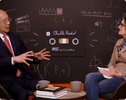
Two people are seated and engaged in conversation in front of a blackboard-themed backdrop with MIT OpenCourseWare branding, a large cassette tape graphic labeled “Chalk Radio,” and various scientific drawings and equations.
Chalk Radio Season 7
Chalk Radio season 7 unlocks new ways of understanding one’s potential
After years of delivering top-notch audio content, Chalk Radio® debuts a new video format featuring MIT’s Andrew Lo and Ana Bell.

Sara Feijo | MIT Open Learning
Publication Date: April 16,2025


For years, MIT’s Chalk Radio® podcast has taken listeners behind the scenes of some of the most interesting courses on campus featuring insights from instructors. Now, in its seventh season, Chalk Radio is debuting a new video format, bringing its audience closer to the action than ever before.

Launched by MIT OpenCourseWare in 2020, Chalk Radio episodes primarily focused on how MIT educators teach. But the conversations have deepened over the years, focusing on guests’ personal lives and how their learning journeys have shaped their research, teaching, and initiatives in their fields.

“Our episodes have gone from tightly narrated conversations with signposts for listeners, to more free-flowing, long-form interviews, to now videos in which our audience feels like they are sitting right here with us in the studio,” says Sarah Hansen, Chalk Radio’s host and the assistant director of open education innovation at OpenCourseWare. “What’s remained consistent over the years, however, is how much MIT instructors care about solving big problems in the world, how generous they are with their knowledge, and how much they believe in learners’ abilities both on campus and online to lend their own insights to solving these challenges, too.”

Guests featured on the Chalk Radio podcast share their teaching materials on the OpenCourseWare website, making it easier for listeners to take a deeper dive into the topics that inspire them. Launched in 2001, OpenCourseWare, part of MIT Open Learning, offers materials from more than 2,500 courses that span the MIT undergraduate and graduate curriculum. With an open license that allows the remix and reuse of its educational resources, OpenCourseWare serves as a global model for open sharing in higher education.

Chalk Radio’s seventh season features engaging, casual conversations. “The initial motivation to add the video component was that these great unexpected, funny, and endearing moments were happening between Sarah Hansen and our guests,” says Brett Paci, Chalk Radio’s producer. “While hearing them is great, we also wanted people to see them.”

The first episode went live today and features Andrew Lo, the Charles E. and Susan T. Harris Professor and director of the Laboratory for Financial Engineering at MIT Sloan School of Management. Lo, whose finance lectures on the OpenCourseWare YouTube channel have received millions views, chats about his teaching style and how he makes finance accessible to a broader audience.


The second episode will go live in May. Ana Bell, senior lecturer and a member of the Digital Learning Lab at MIT Open Learning, makes a compelling case for why everyone should learn the basics of programming — just as they learn basic math even if they don’t plan on becoming mathematicians.

“Both guests have that desire to bring everyone along for the ride and make sure everyone feels confident that they can understand these topics and maybe even excel in them,” says Paci, assistant director of OpenCourseWare’s media production. “Andrew Lo and Ana Bell are two of the kindest, gentlest people you’ll ever meet, so getting to produce these two episodes was one of the best experiences I’ve had since we started Chalk Radio over five years ago.”

For Hansen, the guests of Chalk Radio’s new season have opened up new ways of understanding her own potential.

“They have caused me to rethink what I can accomplish in fields that formally felt inaccessible to me, such as finance and programming,” Hansen says. “I am so excited that our listeners may have a similar experience. When we unlock pathways to learning, anything is possible.”

For more information or to watch the new season, visit the Chalk Radio website.

Back to Chalk Radio
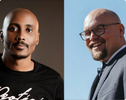
A collage of Emmanuel Kasigazi and Michael Jordan Pilgreen‘s headshots.
Open Learners Podcast
Podcast highlights how anyone in the world can benefit from MIT’s open education resources
Hosts Emmanuel Kasigazi and Michael Jordan Pilgreen interview learners about the transformational impact of MIT Open Learning’s free online courses.

Katherine Ouellette | MIT Open Learning
Publication Date: September 27, 2024

Growing up in Kampala, Uganda, Emmanuel Kasigazi did not expect to share much in common with someone from Memphis, Tennessee. But when he connected with Michael Jordan Pilgreen over MIT Open Learning’s online courses and resources, they realized what a profound impact open education had on both of their lives.

“It blew my mind that this was a person across the continent. But then as we kept talking, we found that we had similar interests. We are both on this journey to transition our careers,” says Kasigazi, who is currently pursuing his master’s in Data Analytics and Visualization at Yeshiva University. “And what brought this all together was this platform.”

Inspired to connect other learners on a global scale, Kasigazi and Pilgreen are launching the Open Learners Podcast, which premieres on October 2 as a special season of MIT OpenCourseWare’s Chalk Radio. Each episode features a new story of how open education has transformed the lives of learners. Kasigazi and Pilgreen interview learners from different countries, cultures, and backgrounds about their experiences using MIT Open Learning’s resources on OpenCourseWare, MITx, MITx MicroMasters, and more.

“We are providing a place for the next generation of open learners to share their voices,” says Pilgreen, a financial technology startup consultant. “I am so happy to share these beautiful stories of hope and inspiration from across the world.”


Kasigazi and Pilgreen hope this podcast will show other online learners that they’re not alone in their educational journey.

“People are still fundamentally the same, going through the same struggles, and going through the same self-doubts when approaching learning,” Pilgreen says.

Kasigazi adds how the podcast showcases various learning journeys. “Here’s another person on another continent who went through the same thing, and they made it, and it was okay,” he says.

The hosts also recognize that education is not always accessible — and in some cases, it is prohibited altogether. But they hope the Open Learners Podcast will empower listeners to continue pursuing their educational and career goals.

“We live in the information age, knowledge is power, and MIT OpenCourseWare gives you that power,” says Kasigazi. “I hope listeners understand that they too can do it, they too can change their lives for the better.”

To share your open learning story with Kasigazi and Pilgreen, email open_learners_pod@mit.edu.

Chalk Radio is a podcast about inspired teaching at MIT produced by MIT OpenCourseWare, which is part of MIT Open Learning. OpenCourseWare offers free, online, open educational resources from more than 2,500 courses that span the MIT undergraduate and graduate curriculum. MITx offers high-quality massive open online courses adapted from the MIT classroom for learners worldwide. The MITx MicroMasters Programs provide an affordable, accelerated, and convenient path to a master’s degree. The credential itself is also valuable for professionals as they move through their careers.

Back to Chalk Radio
Juan
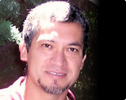
Juan Guerrero
Transforming medical treatments from theory to reality
After a 33-year career in biotechnology, Juan Guerrero uses MIT Open Learning’s online resources to continue improving his skills and understanding.

Katherine Ouellette | MIT Open Learning
Publication Date: May 14, 2025

Over Juan Guerrero’s 33-year biotechnology career, he has watched gene editing evolve from theory to reality. But Guerrero still recognizes the importance of continuing his education despite having a front-row seat to the genome industry since its inception.

Guerrero received a degree in biology from University of California, Berkeley (UC Berkeley) in 1992, and joined the workforce of thousands of sequencers mapping DNA. However, six years after leaving his job as a sequencing associate at Incyte, a lecturer at UC Berkeley informed Guerrero that the technology used to sequence the human genome had already become obsolete.

“This stark contrast highlights the rapid pace of technological evolution in this field,” says Guerrero. “Motivated by this insight, I decided to return to school, starting with a course in genetics.”

That’s when Guerrero enrolled as a part-time student at Pasadena City College in Los Angeles in 2016. Since then, he continues to deepen his knowledge with MIT Open Learning educational resources.

“I decided to update my skills in the sciences because they change rapidly,” says Guerrero.

Strengthening understanding

Guerrero credits MIT Open Learning’s online resources with making a significant difference in his academic journey over the last decade. While searching for extra study materials to practice key concepts from his Pasadena City College courses, Guerrero was thrilled to find that MIT OpenCourseWare, part of Open Learning, offers a comprehensive collection of educational materials from thousands of MIT courses all in one place.

“Due to the excellent array of available biology courses, I selectively explore topics from various OpenCourseWare course materials according to the particular concepts I wish to comprehend,” he says.

Guerrero appreciates that OpenCourseWare dives deep into specific topics through an assortment of quizzes, exams, lecture notes, and videos.

“It does challenge you to learn the concept, while at the same time, retaining it much better,” says Guerrero.

MIT’s approach is different from how he first learned these concepts as an undergraduate — which he describes as “brute force memorization.”

In one OpenCourseWare biology course lecture, for example, Guerrero studied a diagram of a cell that traced the path from nucleus to DNA. During a later assignment about protein production, he made the connection, “Oh, it goes by path. It’s organized,” he says. This holistic approach to learning helped strengthen his understanding of the concept.

Guerrero also appreciates the platform’s flexibility, allowing him to learn on his own schedule.

“What truly sets OpenCourseWare apart is its commitment to accessibility,” Guerrero says. “Not every student needs to be enrolled in a program and OpenCourseWare has made that possible. You can access what you want and it’s free.”

Additionally, OpenCourseWare’s Creative Commons license allows anyone to modify, remix, and reuse its resources. This is particularly important for community colleges, like Pasadena City College, participating in California’s Zero Textbook Cost Program. The strength of OpenCourseWare for educators and students, Guerrero says, is that “people know it’s coming from a reliable, verified source — coming from MIT.”

Researching medical applications

After three decades in the biotech industry with roles ranging from research and development, to production, to quality assurance, Guerrero aspires to return to DNA research. He hopes to use advanced technologies that weren’t available during his previous time in the field — such as Next Generation Sequencing and CRISPR — to develop new medical applications. He aims to transform theoretical concepts into practical treatments for curing diseases and other conditions.

“I’ve always thought about that aspect of helping someone with the technology made available,” he says. “However, I would prefer to remain in an academic environment until I have developed a comprehensive understanding of these technologies, as well as a solid foundation in genetics, which I believe is essential for effectively employing these advancements.”

He says that OpenCourseWare has offered him a wealth of resources for his studies in genetics and other biological and chemical sciences.

“The internet sped up the dissemination of all kinds of information,” Guerrero says. “There’s always so much more out there. You need updated knowledge.”

Back to top
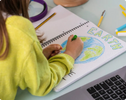
A child wearing a yellow sweater is drawing the planet Earth on a notebook. The word “Earth” is colored in green
Photo by iStock
Perspective: Catalyzing climate education with open resources and practices
MIT OpenCourseWare Director Curt Newton shares how open educational resources can spark climate literacy and engagement.

Curt Newton| MIT OpenCourseWare
Publication Date: May 28, 2025

For years, open education has been delivering benefits for learners around the world, saving enormous sums on textbooks and creating more adaptive and culturally relevant learning through the dedication and creativity of open educational resources-empowered educators. This foundation of open educational resources and practices can grow in so many directions — and perhaps none is more important than building society’s capacity to respond to the existential challenge of climate change.

The accelerating pace and scale of changes, from developing transformational technologies to communities creating resilient responses, makes it imperative that all ages and all sectors of society, “from K to gray,” develop climate literacy and engagement. Open Educational Resources (OERs) about climate, plus the vital open practices of OER adaptation and inclusion that bring them to life for learners, set us on course to infuse climate considerations across all topics of study, and empower every job to become a climate job.

MIT helped give rise to the OER movement with its 2001 launch of MIT OpenCourseWare, an expression of the ethos of open sharing that runs deep here and keeps growing. At MIT, we’re developing an expanding range of open climate learning programs with a focus on or relevance to K-12 education.

While MIT OpenCourseWare is mostly college level, it also includes resources built for and relevant to high school-age learners. For example, Thermodynamics and Climate Change is an OER created for and used successfully in an MIT program for rising high school seniors. More generally on MIT OpenCourseWare, introductory college-level materials can inspire younger learners with interesting concepts and fields to explore. For instance, a Climate Justice Instructional Toolkit provides classroom materials, video lectures, and teacher guides to facilitate bringing climate justice content and related instructional approaches into courses across all disciplines. And, some of the short “Why This Matters” video excerpts from an introductory chemistry OER are being curated into this collection for K12 climate education. For more from MIT OpenCourseWare, see the four “MIT Environment and Sustainability” collections on the OER Commons Climate Education Hub.

The MIT Climate Portal is home to engaging resources for the “climate curious.” One highlight is a collection of short Explainers on key topics, written for a general audience. They have been adapted by a community of K-12 educators specifically to speak to their needs, exercising the “5Rs” rights granted by the Creative Commons license on the original Explainers.

Also on the MIT Climate Portal are the award winning TILclimate podcast with educator guides for some episodes, the Ask MIT Climate feature which provides expert answers to submitted questions, and a multimedia climate primer written by renowned scientist Kerry Emanuel.

Two MIT programs provide climate OER specifically designed for K-12 settings. Climate Action Through Education (CATE) is MIT’s modular interdisciplinary standards-aligned climate change curricula for U.S. high school teachers, including lessons in History/Social Science, English/Language Arts, Math, and Science. CATE is created by practicing high school teachers, and guided and supported by MIT faculty and staff. MIT Day of Climate offers hands-on lessons and activities for both formal and informal K-12 settings, ranging from the serious fun of Climate Change Charades to an exploration of networked geothermal energy for efficient decarbonized building heating and cooling.

One of the most pressing needs in climate education is to foster the learner’s sense of agency and empowerment. This calls for stretching beyond textbooks and traditional classroom materials. The free online En-ROADS climate simulator, from nonprofit Climate Interactive in collaboration with MIT Sloan School of Management, lets learners explore future pathways for climate action, testing how different solutions can deliver benefits for people and the planet. The free simulator is supported by an OER guided assignment, ancillary materials and trainings, and a vibrant community of facilitators.

We know that creating effective OER and building practices for adopting and adapting them takes commitments of time and resources. There are many programs about climate learning and producing some great materials, but all too often the materials are not shared as OER. Most likely, they don’t realize the catalytic benefits of good climate OER in the hands of educators and learners. I’m glad to report that people are often quite appreciative. Most recently: a few months ago, I’d seen a draft version of some great new climate learning materials, reached out to the team to ask if they knew about OER and might be open to a conversation…and so the Massachusetts Clean Energy Council’s brand-new climate careers curriculum for grades 9–12 is Creative Commons licensed and now in the OER Commons.

What can I do?” is a common and understandable response to the immensity of the climate challenge. As we continue to refine OER methods and have tangible experience with their benefits, one thing we can all do is bring OER in service of building climate literacy and engagement. For all ages and for all settings, climate OER will make a positive difference.

This article was originally published on The #GoOpen National Network.

About the author: Curt Newton is catalyzing more engaged and equitable climate action through open knowledge practices and resources. Professionally, Newton combines two decades of open education leadership as director of MIT OpenCourseWare — part of MIT Open Learning — with serving on MIT’s climate education working group and convening an open climate learning community of practice. As a citizen, Newton is on the leadership team of the Boston Green New Deal Coalition, an active facilitator with the En-ROADS climate simulator, a national convener for the Council on the Uncertain Human Future, an improvising drummer who often performs in the service of climate engagement, and lives in a deep energy retrofit net-zero home.

Back to top

Please Tell Us Your Story

We’d love to hear from you! Please share your story about how OCW has made an impact in your life. Hearing from learners and educators like you demonstrates the true value of OCW. Thank you!